
We recently hired an AI engineer at Harmonyze. We ran a really competitive process with strong candidates across the board. By the time we got to the final stage, we had four people we were genuinely excited about.
To help us make the decision, we built a scorecard. Each person on our team rated every candidate one-to-five across the criteria that mattered to us. Then we normalized the scores and charted everything.
Here's what the data looked like:
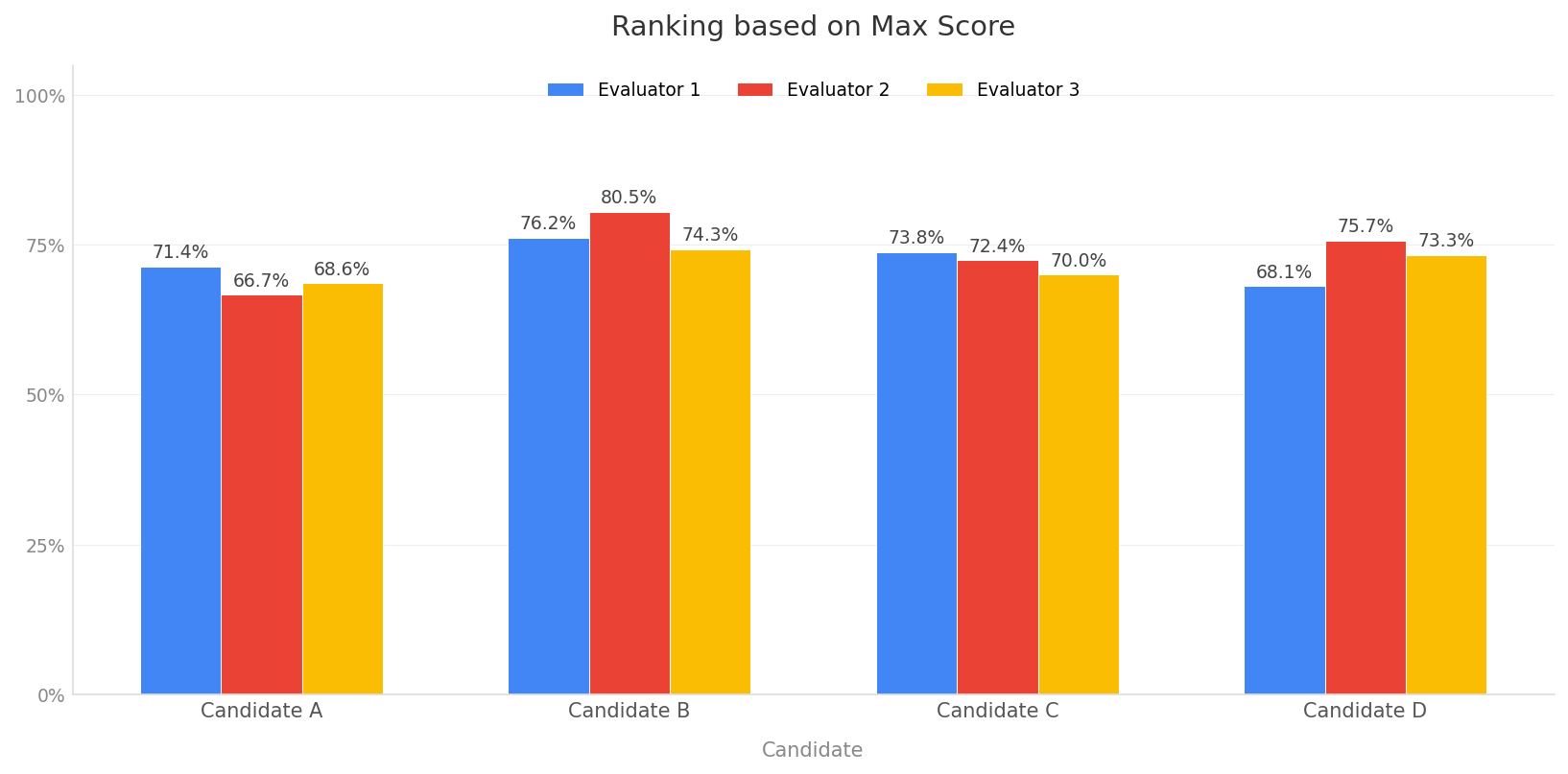
You'll see that everyone on the team had slightly different opinions. One evaluator had a different person in first place than the others. Someone scored a candidate significantly higher than everyone else did. The charts tell a decent story, but there's no obvious winner.
Now flip the view. Same data, grouped by evaluator:
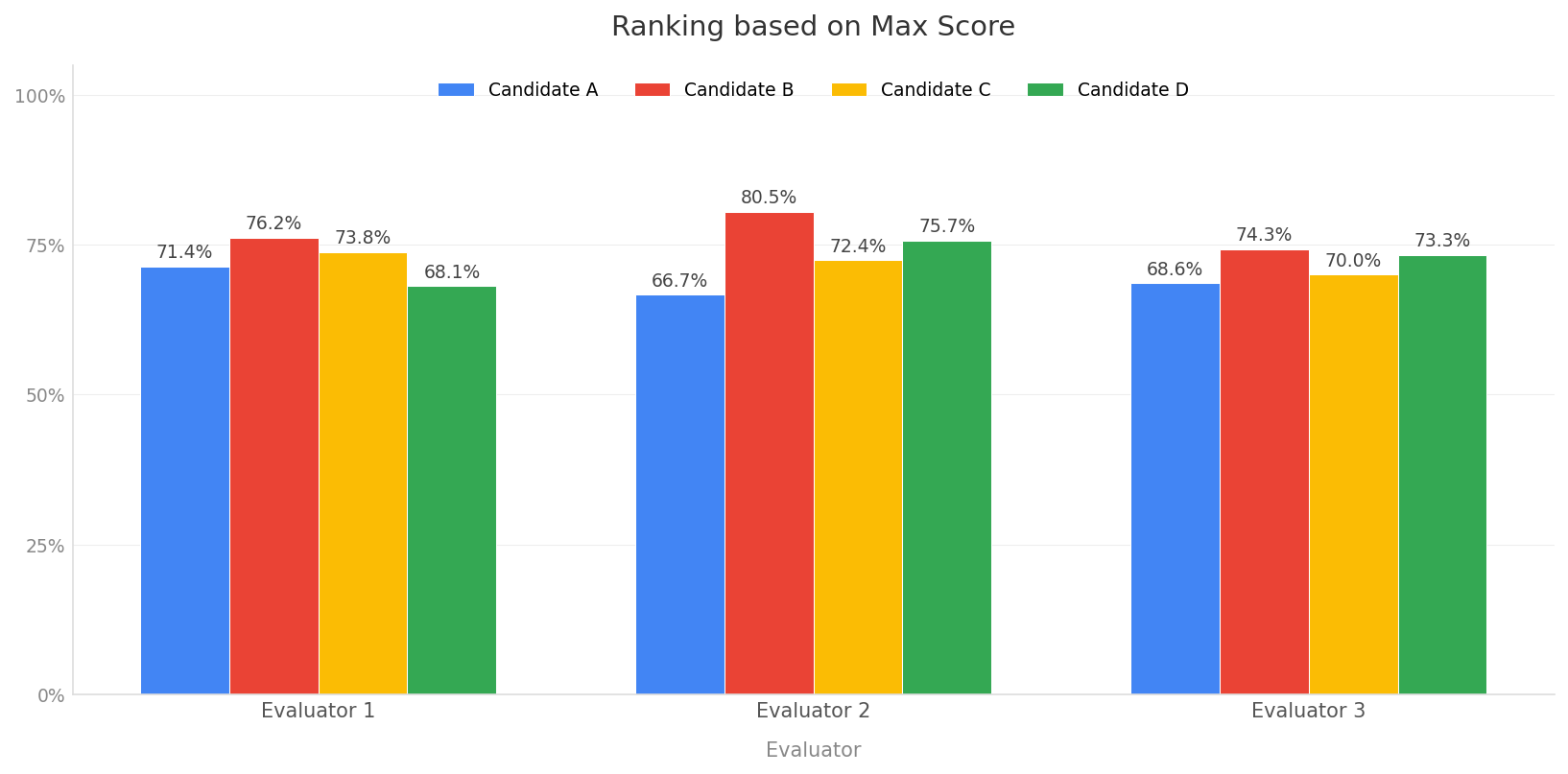
Same takeaway. Reasonable people, looking at the same candidates, arriving at slightly different conclusions. Normalize everything out and the top candidates are within a few points of each other. It's really tough to make a confident call from that alone.
But then we went a step further and pulled in our notes on each candidate. That's when the numbers started to tell the real story.
One candidate, the one a team member had scored highest overall, we all agreed was exceptional. Everyone said they would be amazing. But when we read through the context of our conversations, it became obvious their strengths didn't line up with this particular role. They'd be a better fit on our implementations team as a technical implementations engineer. Different title, different seat. Amazing person, wrong match for what we need right now.
Then we looked at our leading candidate. They were slightly above everyone else on the rubric, but only slightly. The numbers alone wouldn't have given us conviction. What did? Their background. Where they're heading in their career. Their personal connection to the industry and the problems we're solving. When we layered that context onto the scores, it wasn't even close. We had our hire.
This isn't a plug for AI-powered recruiting tools.
Though while we're here, I will say: our Head of Engineering previously helped build Elly AI, which is solving exactly this problem in recruiting.
But the reason I'm writing this post isn't about hiring. It's because that moment, sitting around a table, staring at a chart that didn't give us a clear answer, and then watching the decision become obvious once we added the context? I think a lot of people in franchising know that feeling.
Think about how this plays out in franchise operations. Take a leading children's services franchise with nearly a thousand locations. A franchise business coach is responsible for coaching a portfolio of owners, helping each one improve their business. They've got KPI dashboards. They've got scorecards. They can see revenue, retention, customer acquisition, all of it.
Now look at two locations side by side. The numbers are close. Maybe one is slightly ahead on a few metrics, the other slightly ahead on different ones. A dashboard would tell you they're performing similarly. A static report might rank them nearly the same.
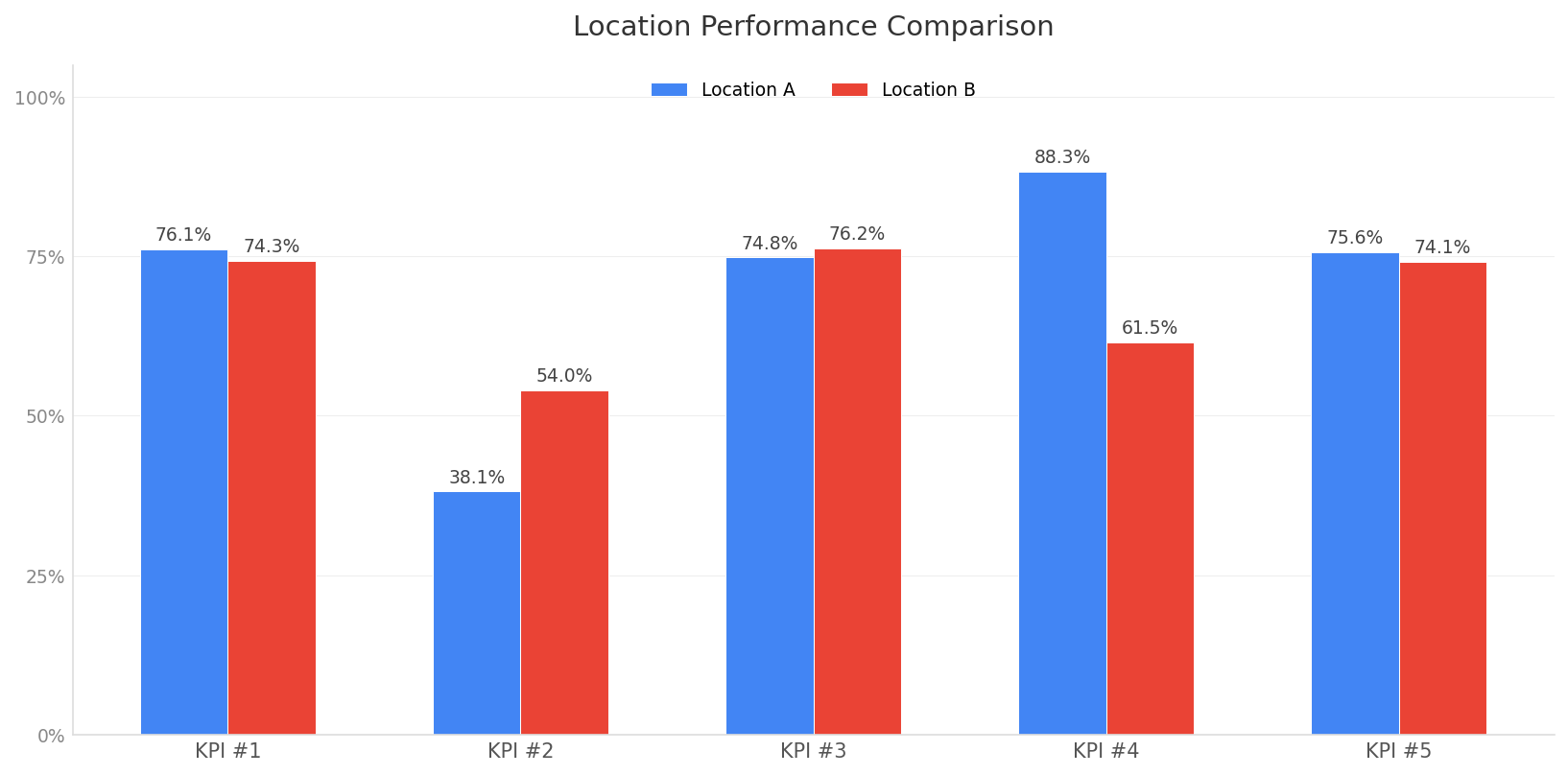 But the coach knows things the dashboard doesn't. One owner is dealing with a new competitor that opened two miles away last quarter. The other mentioned in their last conversation that they're planning an exit within the next year. One is actively hiring and ramping up. The other has been working through staff retention challenges that came up in a recent check-in.
These aren't edge cases. This is the reality of coaching at scale. The data gives you a starting point, but the real, useful, actionable conversation only happens when you have the full picture.
This is what we think about every day at Harmonyze. Our platform takes the structured data, the KPIs, the scorecards, the benchmarks, and combines it with the unstructured context that actually drives decisions: recent conversations, owner goals, local market dynamics, what's been working at similar locations nearby. One of the most powerful things we've seen is when Harmonyze surfaces that a strategy working at a comparable location across the network, one the coach might not even know about, is directly relevant to the owner they're about to sit down with. Not because the numbers matched, but because the context matched. The owner's goals were similar. The market conditions were similar. And it worked.
So when a coach opens Harmonyze before a session, they're not staring at a spreadsheet wondering where to start. They're looking at clear, prioritized guidance that reflects that owner's actual situation. There is no conversation based simply on the data anymore. The conversation is based on the bigger picture, everything that needs to be addressed, with the context always top of mind.
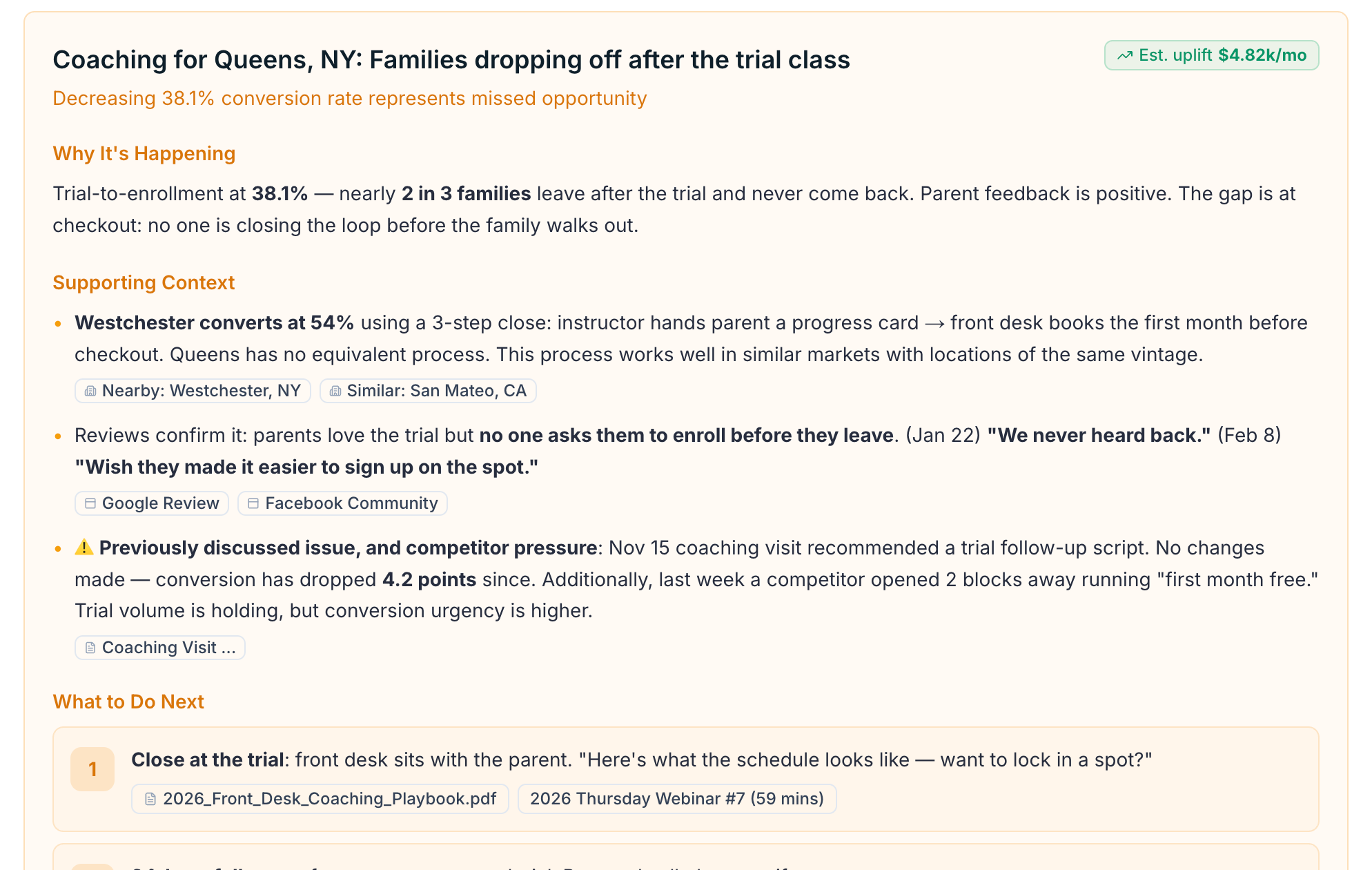 The same location in Harmonyze. Context changes the entire conversation.
We didn't set out to prove this point through a hiring process. But it was a pretty good reminder of why we're building what we're building. The best decisions, whether you're choosing a candidate or coaching a franchise owner, don't come from the scorecard alone. They come from understanding what the scorecard can't capture.
The same location in Harmonyze. Context changes the entire conversation.
We didn't set out to prove this point through a hiring process. But it was a pretty good reminder of why we're building what we're building. The best decisions, whether you're choosing a candidate or coaching a franchise owner, don't come from the scorecard alone. They come from understanding what the scorecard can't capture.
Data gets you to the table. Context gets you to the decision.
Written by Jonny Greenspan, CTO & Co-Founder of Harmonyze